Adventist Possibility Ministries puts inclusion at the heart of GC Session
As thousands gather in St. Louis for the sixty-second General Conference Session, most people notice the big things—delegates casting votes, inspiring sermons, and colorful international attire. But behind the scenes a quiet and intentional effort is ensuring that everyone—regardless of physical ability—can fully participate in the global church event.
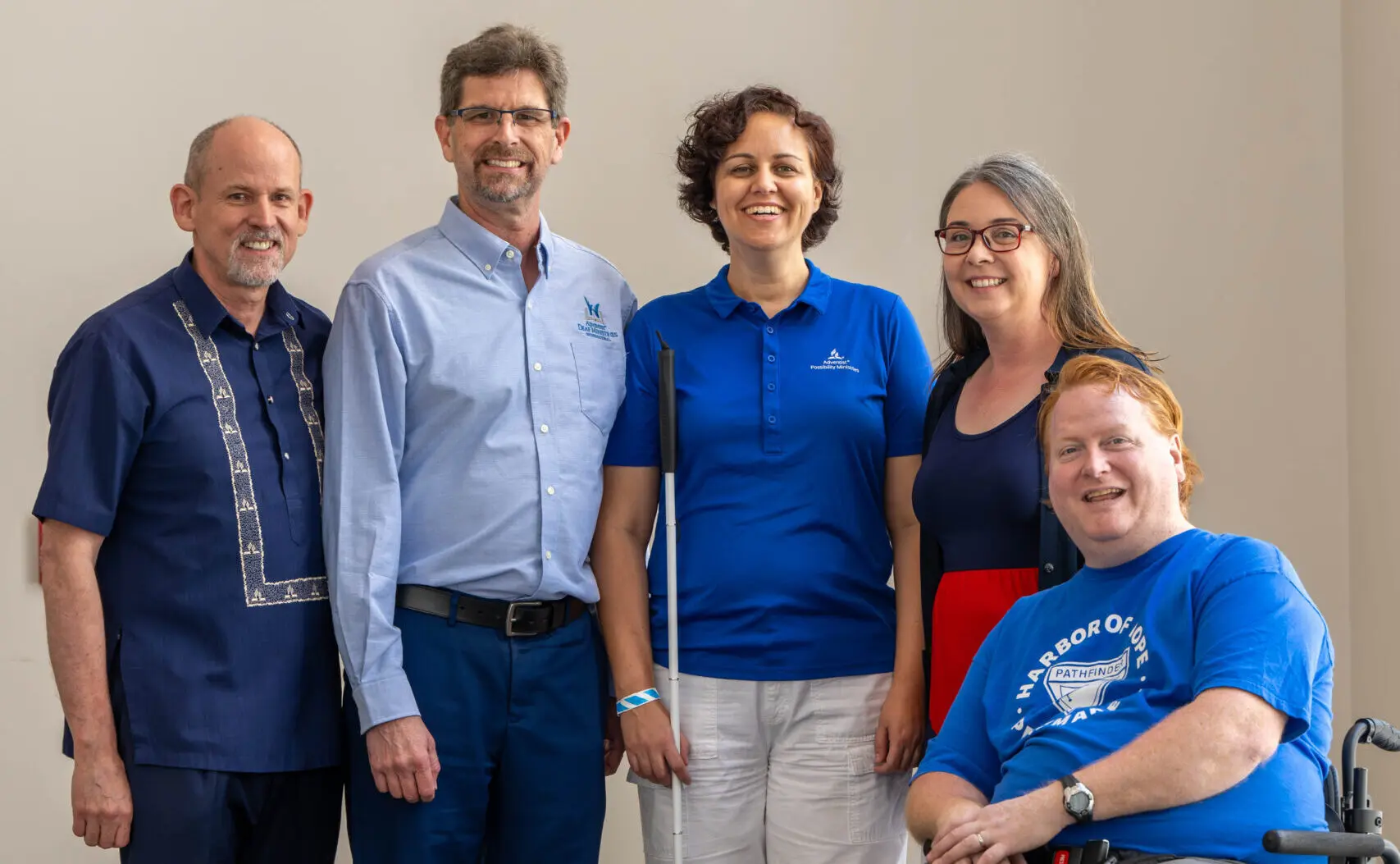
Ernesto Douglas Venn, assistant to the president for Adventist Possibility Ministries and coordinator for Adventist Deaf Ministries International, has spent the past three years working with a dedicated team to prepare for attendees with special needs.
From the very beginning, Venn and his team have followed the principle: Nothing about us without us. “I rely on the first-person experience of my team, my global team,” he explained.
Planning for the Deaf and Hard-of-Hearing Community
One of the most complex aspects of accessibility planning has been making sure deaf delegates and attendees feel seen and included. It’s more complicated than it sounds. “We had multiple committees. One committee worked with the deaf community to help look at the accessibility needs for sign language.” Once the unions communicated the accessibility needs of their delegates, Venn’s team went to work to provide for the different sign languages necessary.
A common misconception is that one sign language fits all. But just as there are different regional dialects for spoken languages, each nation has its own sign language—although there are branches of sign language that are interconnected. Some, such as French and American Sign Language (ASL), have a shared history.
Multiple sign language interpreters are present in Women’s Ministries meetings, youth Sabbath School, and the general sessions inside the Dome. Online, the GC Session YouTube channel is livestreaming American Sign Language interpretation of key events, reaching more than 1,200 viewers each day.
“We set all of this up initially for one in-person delegate—Pastor Jeff Jordan, who is the only deaf Adventist pastor in North America,” Venn said. “But we’re seeing many more people connect online, and they’re sending messages thanking us. They want to know what’s going on, and they appreciate this service.”
“There’s always more to do, especially as technology improves, but we’re grateful for what’s been possible this time around.”
Partnering with Adventist World Radio, the team also ensured that devices are available inside the Dome for people with hearing loss. “There’s always more to do, especially as technology improves,” Venn said. “But we’re grateful for what’s been possible this time around.”
For Those With Vision Impairment
For those who are blind or have low vision, the convention center’s Americans with Disabilities Act compliance covers many physical needs. But Venn points to Juliana Santos, his cochair for the task force for those who are blind or with low vision, for deeper insight.
“I have found here in general that the city is very accessible,” she said. “The convention center does not have tactile strips or marks on the floor [for canes], however. One area that could be improved is providing a device with an audio description of the PowerPoint slides, the visual backgrounds on the main stage, and the beautiful clothing. We would benefit from that.”
Santos’ husband describes things happening on the main stage for her, but there are no general materials available in Braille—except at the Christian Record Services for the Blind booth in the exhibit hall. Having these resources would improve the experience for people with visual impairments.

Navigating With Mobility Needs
Accessibility for wheelchair users has also been a focus. “Because St. Louis is a gracious host, provisions for accessibility are just part of the stadium. I did do a spot check, though [I have a sensitivity to this because of my mother-in-law],” Venn said.
Venn mentioned a recent moment when a delegate’s battery-operated wheelchair died on the sidewalk. “Another delegate and I helped push him back to his hotel,” he said. “That’s the kind of thing people aren’t aware of, especially with the distance between things.”
For those needing mobility support, local providers in St. Louis were vetted and included in the city’s welcome materials for attendees, as well as on the official session app.
Terry Trecartin, a member of the Adventist Possibility Ministries task force and an ambassador for wheelchair users, shared his personal experience. “Inside the convention center, the carpets are a little bit rough and my hands get tired, but I can get to all the buildings here. There are elevators, and the hallways are wide. And as long as there are curb cuts in the sidewalk, I can go anywhere.” His wife, Shannon, was quick to add that all the levels of the stadium have wheelchair seating with clearly designated spots.
Adventist Possibility Ministries has partnered with Hope Channel, Adventist News Network, and Adventist Review to help tell the story and provide technical and media support. “We can say thank you to IT and the Hope Channel team who built an elaborate and comprehensive area for sign language livestreaming,” Venn said.
At the 2025 GC Session intentional efforts by Adventist Possibility Ministries are making a meaningful difference for attendees with different abilities. From sign language interpretation in multiple languages to mobility information, a dedicated team has worked behind the scenes to ensure that all participants can fully engage. It reflects a growing awareness within the Adventist Church that inclusion isn’t optional—it’s essential to mission.
To watch session proceedings in ASL, use this link: https://www.gcsession.org/live
This article was originally published in Adventist Review.